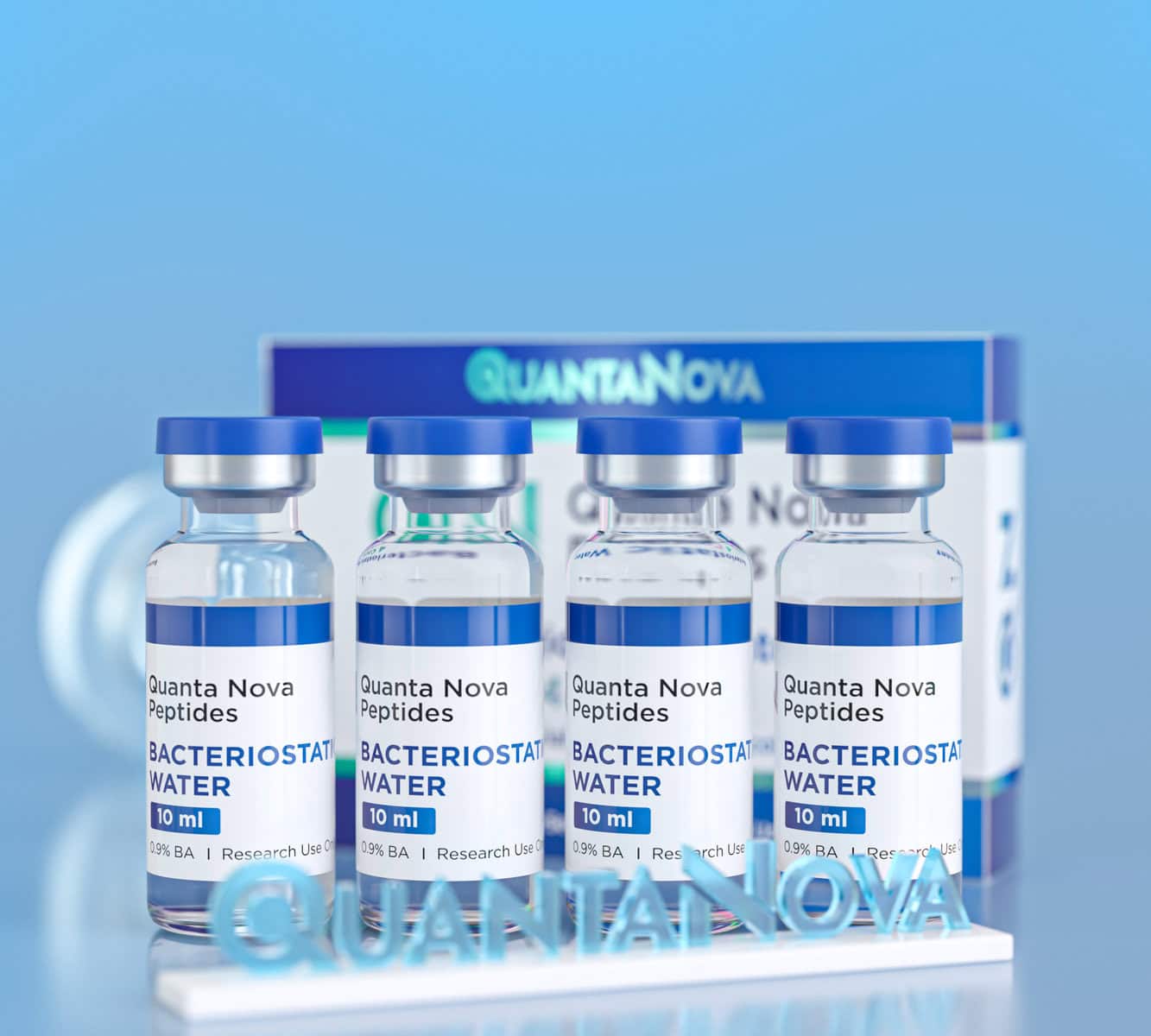
DescriptionProduct OverviewQuantaNova AOD 9604 is a lyophilized peptide, available in a 10mg strength, bundled in a 4-pack. Manufactured under strict quality standards, each vial is filtered using PES 0.22μm micron filtration to eliminate potential bacterial contaminants. The peptide is lyophilized in-house using our proprietary stabilization technique, engineered to preserve peptide structural integrity during fluctuations in temperature for up to 30 days. Each batch is independently verified by Vanguard Laboratory, an ISO-certified facility that tests for identity, purity, quantity, and endotoxins. QuantaNova’s commitment to purity and quality provides peace of mind to those who rely on consistent results.AOD 9604 Peptide StructureAmino Acid Sequence: Tyr-Leu-Arg-Ile-Val-Gly-Gln-Leu-Ser-AlaMolecular Formula: C78H123N23O23Molecular Weight: 1815.1 g/molCAS Number: 221231-10-3Key Findings of AOD 9604Studied as an HGH analogue to increase fat reductionExplored for effects on lipolysis without insulin disruptionInvestigated for cartilage and joint recoveryObserved in cardiovascular models related to heart disease In-Depth Research Applications of AOD 9604AOD 9604 and Fat MetabolismAOD 9604 has been studied for its ability to mimic the lipolytic segment of human growth hormone, particularly in preclinical models. Its mechanism appears to involve the stimulation of fat breakdown (lipolysis) while avoiding direct interaction with blood glucose metabolism. In rodent studies, researchers have evaluated AOD 9604 for its impact on stored fat deposits, particularly in visceral and abdominal regions. This selective activity has made it a candidate of interest in obesity-related investigations.Further research suggests that AOD 9604 operates through the β3-adrenergic pathway, a receptor class known to mediate lipolytic responses in fat cells. By targeting this pathway, AOD 9604 has been shown to help maintain lean mass in certain models, without exhibiting the growth-promoting effects of intact HGH.AOD 9604 and Joint HealthBeyond its role in adipose tissue studies, AOD 9604 has been explored in models of cartilage regeneration and joint function. Investigators have assessed whether this peptide fragment could promote recovery in connective tissues such as ligaments and tendons. Animal studies examining cartilage integrity have noted potential improvements in matrix composition and joint flexibility during recovery periods, making it a research candidate in post-injury musculoskeletal models.Long-term dosing studies have also been conducted to evaluate tissue tolerance and inflammation markers, suggesting a favorable profile in terms of local joint impact and systemic safety.AOD 9604 and Cardiovascular HealthAOD 9604 has also been studied in cardiovascular research models, where its potential influence on lipid metabolism and vascular function has drawn attention. In particular, researchers have measured the peptide’s effect on LDL/HDL ratios, triglyceride levels, and arterial stiffness. These early findings open pathways for future investigation into how fat metabolism peptides might intersect with cardiovascular disease models.Some preclinical reports have indicated possible endothelial protective mechanisms, although these require additional validation in clinical research environments.ResourcesAOD 9604 and Fat MetabolismAOD 9604 and Joint HealthAOD 9604 and Cardiovascular HealthUsage & Storage Guidelines of AOD 9604Handle using appropriate laboratory safety procedures.Storage (Lyophilized): Store at -20°C.After Reconstitution: Store between 2–8°C and use within 14–30 days.Diluent Recommendation: Reconstitute with bacteriostatic water or a suitable research-grade diluent.Legal DisclaimerThis product is intended strictly for laboratory research purposes only. It is not a drug, food additive, cosmetic, or therapeutic substance, and must not be used in humans or animals. It is the buyer’s responsibility to handle the product safely and in accordance with applicable laws and regulations.