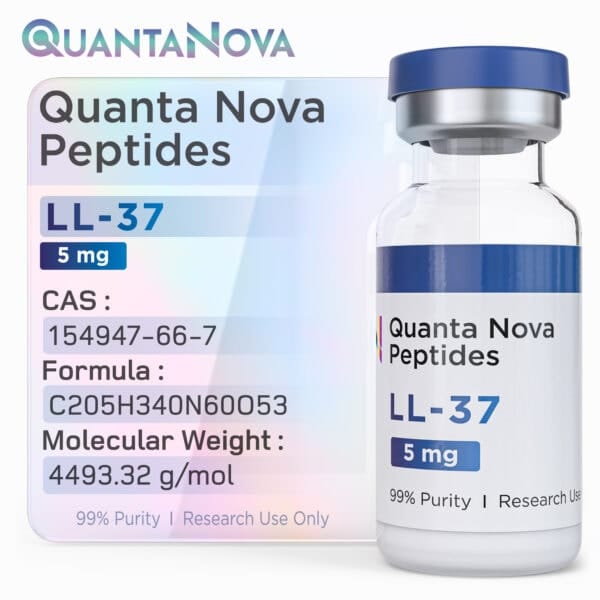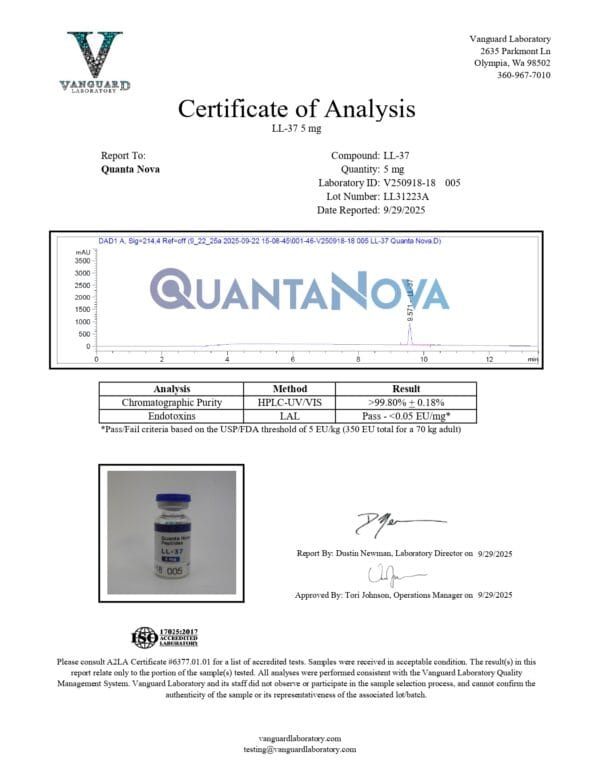
DescriptionProduct OverviewQuantaNova’s LL-37 5mg peptide comes in a 4-vial bundle of lyophilized powder. Each vial is freeze-dried in-house with a proprietary technique that protects the structural integrity of the peptide during fluctuations in temperature for up to 30 days. This includes brief exposure to warm or cold conditions during shipping and handling.LL-37 is processed with PES micron filtration to help eliminate potential bacterial contaminants. QuantaNova handles every step of the lyophilization process at our facility, ensuring consistency from batch to batch. Vanguard Laboratory, an ISO-certified third-party testing facility, independently verifies all products. Testing confirms Identity, Purity, Quantity, and Bacterial Endotoxins, supporting our commitment to transparent, high-quality research peptides.LL-37 Peptide StructureAmino Acid Sequence: LEU-LEU-GLY-ASP-PHE-PHE-ARG-LYS-SER-LYS-GLU-LYS-ILE-GLY-LYS-GLU-LYS-ARG-ILE-VAL-GLN-ARG-ILE-LYS-ASP-PHE-LEU-ARG-ASN-LEU-VAL-PRO-ARG-THR-GLU-SERMolecular Formula: C211H377N67O50Molecular Weight: 4493.28 g/molCAS Number: 101594-32-5Key Findings of LL-37Studied for its potential antimicrobial and immunomodulatory effectsExplored in research involving tissue repair and wound healingInvestigated for its influence on inflammatory response pathwaysStudied in the context of epithelial barrier protectionResearched for potential regulation of cell proliferation and angiogenesisIn-Depth Research Applications of LL-37Antimicrobial and Immune ModulationLL-37 is the only human cathelicidin peptide identified to date. It is produced naturally by various epithelial cells and immune cells, and is heavily studied for its broad-spectrum antimicrobial properties. In vitro studies suggest that LL-37 interacts directly with microbial membranes, helping to neutralize gram-positive and gram-negative bacteria, fungi, and even some viruses. These interactions support its value in immune response models and microbial defense studies.Wound Healing and RegenerationLL-37 has gained research interest in tissue repair and wound healing applications. Findings from cell culture studies indicate that LL-37 may influence keratinocyte migration, collagen deposition, and re-epithelialization, processes that are central to wound closure. Because it can act on both inflammatory cells and skin cells, LL-37 is often used in models involving skin trauma, burns, or ulcerations.Inflammation RegulationSeveral in vivo and in vitro studies suggest that LL-37 plays a dual role in modulating inflammation. It has been found to suppress certain inflammatory cytokines while promoting immune surveillance and defense signaling. Its regulatory role makes it a valuable peptide for inflammation-related research, including chronic inflammatory conditions.Barrier Protection and Cellular HealthLL-37 has also been studied for its role in maintaining epithelial barrier function, especially in the gastrointestinal and respiratory systems. Research suggests it supports the integrity of tight junctions between epithelial cells, which may reduce permeability and improve overall cellular resilience. Additionally, it has shown influence on angiogenesis and may contribute to tissue vascularization under injury conditions.ResourcesAntimicrobial and Immune ModulationWound Healing and RegenerationInflammation RegulationBarrier Protection and Cellular Health Usage & Storage Guidelines of LL-37Handle using appropriate laboratory safety procedures.Storage (Lyophilized): Store at -20°C.After Reconstitution: Store between 2–8°C and use within 14–30 days.Diluent Recommendation: Reconstitute with bacteriostatic water or a suitable research-grade diluent.Legal DisclaimerThis product is intended strictly for laboratory research purposes only. It is not a drug, food additive, cosmetic, or therapeutic substance, and must not be used in humans or animals. It is the buyer’s responsibility to handle the product safely and in accordance with applicable laws and regulations.